
Newsletter Sponsorships: Formats, Pricing, and Tracking

New to this topic? Start with our beginner's guide to newsletter sponsorships for brands before diving into formats and pricing.
Newsletter sponsorships are paid advertising placements within curated email newsletters, where brands pay publishers to reach a defined, opted-in audience through formats like Primary Ads, Dedicated Sends, and Native Advertorials. Understanding how newsletter sponsorships work, including formats, pricing structures, and tracking methodologies, is the difference between a campaign that generates measurable pipeline and one that burns budget with no clear return. Platforms like Media Intercept, data sources like Dupple, and tracking tools like y.hn have made this channel more transparent and measurable than ever before. This guide covers every layer you need to plan, execute, and evaluate a newsletter sponsorship campaign with confidence.
What are the main newsletter sponsorship formats and how do they differ?
Newsletter sponsorship formats determine your share of voice, placement position, and the creative latitude you have to engage readers. Each format carries a distinct price range and serves a different campaign objective.
Primary Ads are the top-of-newsletter placements that appear before or immediately after the main editorial content. They command the highest visibility in a standard issue and typically include a headline, short body copy, and a call-to-action link. For mid-sized B2B newsletters, primary ad pricing runs $1,100 to $5,000 per placement. That range reflects the difference between a 10,000-subscriber niche list and a 100,000-subscriber industry publication.
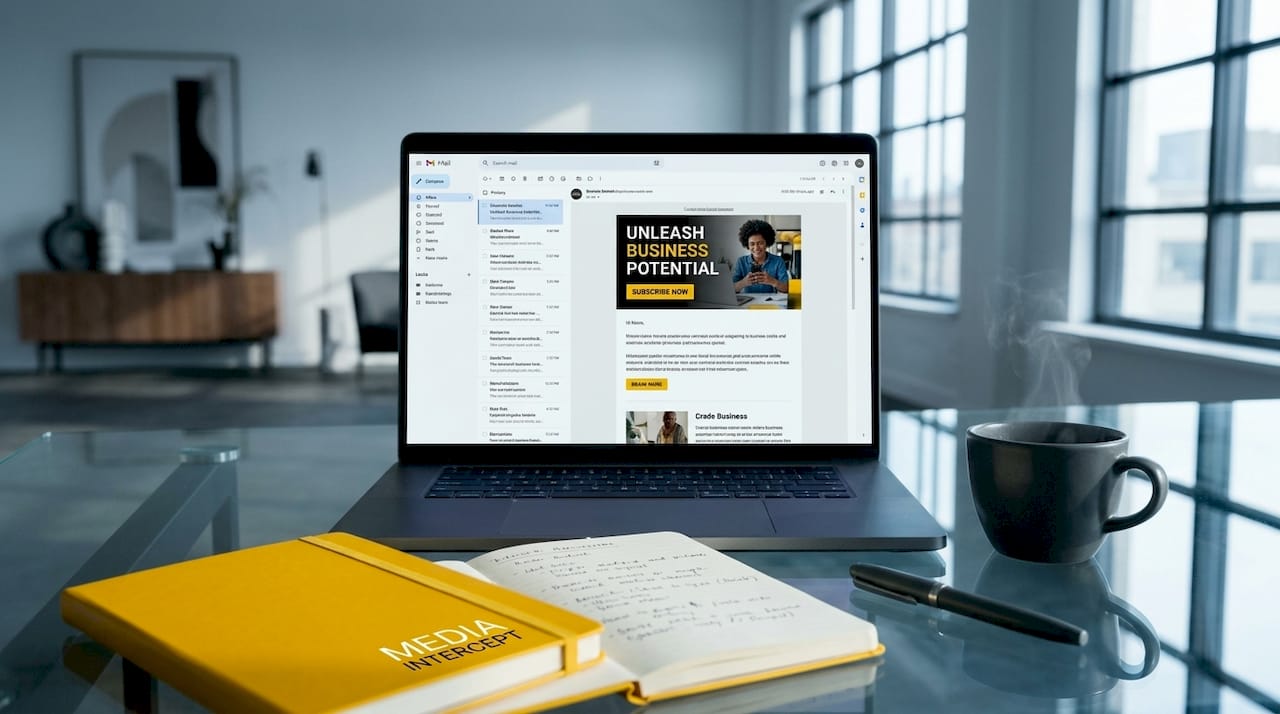
Dedicated Sends are standalone emails sent entirely on behalf of the advertiser, with 100% share of voice and no competing editorial content. These are the most premium format in the channel. Dedicated send pricing starts at $5,000 and can exceed $50,000 on high-engagement premium lists. The trade-off is cost versus control: you own the entire inbox moment, which makes dedicated sends ideal for product launches, event promotions, or high-value lead generation.
Spotlight Ads are secondary placements, typically mid-newsletter, that offer lower visibility but also lower cost. They work well for retargeting audiences already familiar with your brand or for frequency-building within a longer campaign.
Native Advertorials are editorial-style sponsored content written to match the newsletter’s voice and format. Publishers often write these on behalf of the advertiser, which increases reader trust and engagement. Pricing varies based on production involvement and list size, but advertorials consistently outperform banner-style formats on click-through rate because they blend into the reading experience rather than interrupting it.
Other formats worth knowing include sponsored backlinks within editorial content, sponsored webinars promoted through the newsletter, lead magnet co-promotions, and frequency bundles that lock in multiple placements at a negotiated rate.
Format | Share of voice | Typical price range | Best use case |
Primary Ad | Partial | $1,100–$15,000 | Brand awareness, lead gen |
Dedicated Send | 100% | $5,000–$50,000+ | Launches, high-intent offers |
Spotlight Ad | Partial | $500–$3,000 | Retargeting, frequency |
Native Advertorial | Partial | $2,000–$10,000+ | Trust-building, content offers |
Pro Tip: Ask publishers whether they offer publisher-written copy for advertorials. Publisher-written ads consistently outperform advertiser-written copy because the voice matches what readers already trust.
How is newsletter sponsorship pricing determined?
Newsletter sponsorship pricing is driven by three core variables: list size, audience engagement, and niche specialization. Understanding these factors helps you evaluate whether a quoted rate is fair or inflated.
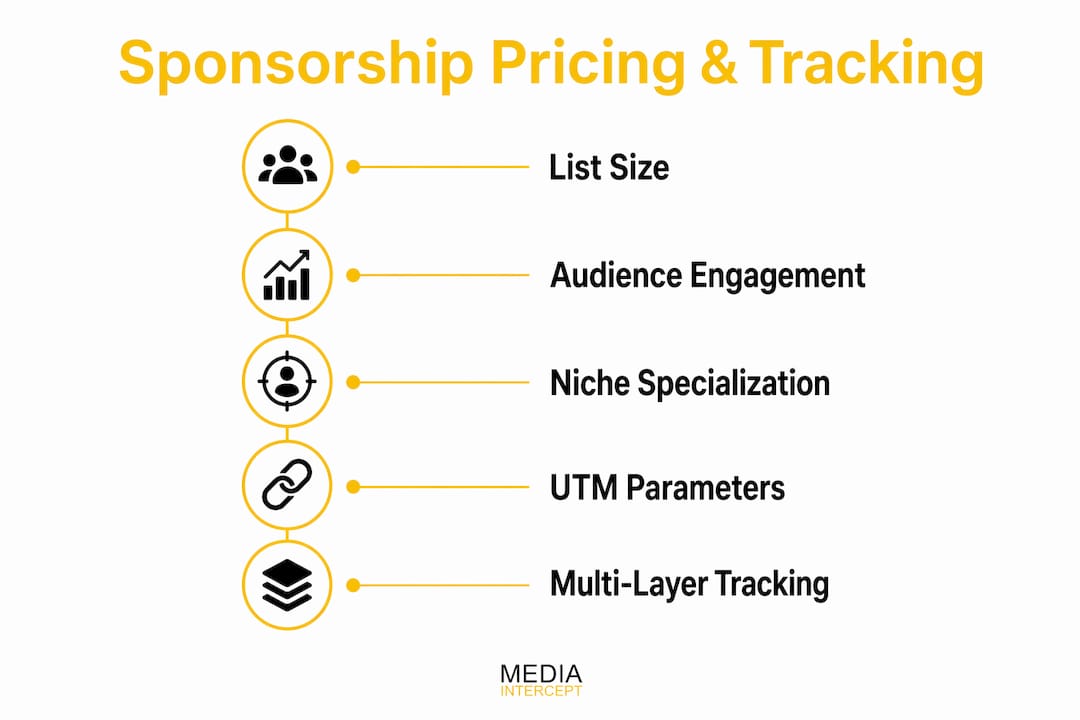
List size is the most visible variable, but it is not the most important one. A newsletter with 50,000 subscribers and a 45% open rate delivers more engaged impressions than one with 200,000 subscribers and a 15% open rate. CPM benchmarks range from $5 for generalist B2B newsletters to $50 for specialist verticals like cybersecurity, fintech, or developer tools. That tenfold difference reflects the premium advertisers pay to reach a precisely defined professional audience.
Niche specialization also affects ad slot scarcity. Publishers who cap sponsorship slots to two or three per issue maintain higher click-through rates and can justify higher CPMs. When a publisher runs six or seven ads per issue, reader attention dilutes and advertiser value drops proportionally.
Pricing models you will encounter include:
CPM (cost per thousand impressions): Calculated against total subscribers or, more accurately, against engaged subscribers based on average open rate. Always ask which denominator the publisher uses.
CPC (cost per click): B2B newsletter CPC typically runs $1 to $3 for mid-sized tech newsletters and $2 to $5 for specialist audiences. Real examples include ElevenLabs at $1.00 CPC, HubSpot at $1.24 CPC, and Intel at $3.00 CPC. Newsletter CPC is two to five times cheaper than LinkedIn sponsored content for comparable B2B audiences.
Fixed flat fee: A set price per placement regardless of performance. Common for dedicated sends and primary ads with established publishers.
Frequency bundles: Multi-placement packages negotiated at a discount. These compound brand recognition across issues and reduce per-placement cost.
Pro Tip: Before accepting a CPM quote, ask the publisher for their last 90-day average open rate and unique click data. Publishers with open rates below 25% are showing questionable engagement, and you should adjust your effective CPM calculation accordingly.
What are best practices for tracking newsletter sponsorship campaigns?
Tracking newsletter sponsorships requires a layered approach because no single data source captures the full picture. The three layers are UTM parameters, link shortener analytics, and web analytics combined with CRM data.
UTM parameters are the foundation. Every link in a sponsored placement should carry tags for source, medium, campaign, and content. Consistent UTM naming conventions use lowercase text, hyphens instead of spaces, and standardized date formats to prevent fragmented data in Google Analytics or your analytics platform of choice. An example tag set looks like: "utm_source=newsletter, utm_medium=email, utm_campaign=q2-launch, utm_content=primary-ad`. Without this discipline, traffic from newsletter placements gets misattributed to direct or organic channels.
Link shortening services like y.hn provide a secondary analytics layer that captures click timestamp, geographic location, device type, and referrer data independent of your website analytics. This matters because if a reader clicks through and immediately bounces, your site analytics may not record the visit at all. The shortener captures the click regardless.
The third layer is multi-touch attribution within your CRM. A reader who clicks a newsletter ad in January may not convert until March. Attribution windows of 30 to 180 days are standard for B2B newsletter campaigns, particularly when the buying cycle involves multiple stakeholders and evaluation periods.
Key tracking metrics to monitor across all three layers:
Unique clicks rather than total clicks, to avoid inflating results from bot traffic or multiple clicks by the same reader
Corporate domain data for B2B campaigns, which reveals which companies are engaging with your content and supports account-based marketing follow-up
Branded search lift, measured by comparing branded search volume in the weeks following a campaign versus baseline periods
Assisted conversions, which show newsletter touchpoints that contributed to a conversion even when another channel received last-click credit
Tracking layer | Tool examples | Data captured |
UTM parameters | Google Analytics, Adobe Analytics | Source, medium, campaign, content |
Link shortener | Click time, geo, device, referrer | |
CRM attribution | Salesforce, HubSpot | Pipeline influence, deal stage, close date |
Pro Tip: Set up a dedicated UTM naming document shared across your team before launching any campaign. One person using “Newsletter” and another using “newsletter” creates two separate traffic sources in your analytics and corrupts your data.
How do advertisers evaluate ROI and negotiate newsletter sponsorship deals?
ROI evaluation for newsletter sponsorships fails when marketers rely on last-click attribution alone. Last-click models systematically undervalue newsletter contributions, especially in B2B buying cycles where a reader may engage with your brand six times before converting. Combining direct response metrics, assisted conversions, branded search lift, and influenced pipeline shows two to four times better performance than last-click measurement alone.
CMOs are applying the same multi-source measurement discipline to sponsorships that they use for broader media investments. Brand health indicators alongside direct conversions give a more complete picture of sponsorship value, particularly for campaigns designed to build awareness in a new market segment rather than generate immediate leads.
For negotiation, the most effective approach is to come prepared with three data points: the publisher’s open rate and unique click history, the CPM benchmark for their vertical, and your own cost-per-acquisition target. Publishers who cannot provide transparent metrics on open rates and unique clicks are not worth the premium they are asking for.
Practical steps for building a negotiation strategy:
Run a three-campaign test sequence: a small test placement, a medium pilot, and a sustained campaign. Each phase builds statistically meaningful data before you commit larger budgets.
Use frequency bundle pricing to lock in rates before a publisher’s audience grows and prices increase.
Negotiate for publisher-written copy as part of the package, particularly for advertorials.
Request post-campaign reporting that includes unique clicks, not just total clicks, and corporate domain data if you are running B2B campaigns.
Long-term partnerships with newsletter publishers consistently outperform one-off placements. Readers build familiarity with recurring sponsors, which compounds recognition and reduces the cost per conversion over time. A newsletter media plan built around three to six months of sustained presence in a single publication typically outperforms the same budget spread across ten one-off placements.
What common pitfalls and expert strategies improve newsletter sponsorship success?
The most common mistake advertisers make is treating CPC as the primary success metric. CPC is a floor metric. It tells you whether people clicked, not whether those clicks created demand, influenced pipeline, or built brand recognition. True ROI measurement requires conversion tracking, branded search lift analysis, and pipeline influence data to capture what the click actually started.
Other pitfalls that consistently undermine campaign results:
Poor UTM hygiene: Inconsistent naming conventions fragment your analytics data and make it impossible to compare performance across campaigns or publishers.
Ignoring assisted attribution: A newsletter placement that introduces your brand to a prospect who converts three weeks later via paid search deserves credit. Ignoring that contribution leads to underinvestment in a channel that is actually working.
Undervaluing engagement metrics: A publisher’s open rate and unique click rate matter more than raw subscriber count. Prioritize audience engagement quality over list size when evaluating placements.
Scaling too fast: Committing large budgets to a single publisher before running a test campaign is a common and costly error.
Expert strategies that consistently improve results include layering measurement frameworks from day one, capping the number of publishers you test simultaneously to maintain data clarity, and using corporate-domain click data for account-based marketing follow-up. Frequency packs compound recognition across issues and reduce the cognitive load on readers who need multiple exposures before they act.
Pro Tip: If a publisher offers you a “remnant” placement at a steep discount, treat it as a test opportunity rather than a budget win. Remnant placements often run in lower-engagement issues, so track them separately from your standard placements to avoid skewing your performance data.
Key takeaways
Newsletter sponsorship ROI requires layered tracking, format selection matched to campaign goals, and multi-touch attribution windows of 30 to 180 days to capture true performance.
Point | Details |
Format selection drives outcomes | Match Primary Ads, Dedicated Sends, or Advertorials to your specific campaign objective and budget. |
Pricing reflects engagement, not just size | CPMs range from $5 to $50 based on niche; always request open rate and unique click data before committing. |
UTM discipline is non-negotiable | Consistent naming conventions across every campaign link prevent fragmented analytics data. |
Last-click attribution undervalues newsletters | Use 30 to 180 day attribution windows and combine CRM, shortener, and web analytics for accurate ROI. |
Long-term partnerships outperform one-offs | Sustained presence in a single publication compounds recognition and reduces cost per conversion over time. |
Why newsletter sponsorship measurement is more nuanced than most marketers expect
I have reviewed hundreds of newsletter sponsorship campaigns, and the pattern that stands out most is not about format or pricing. It is about measurement discipline. Marketers who treat newsletter sponsorships like display ads, measuring only clicks and last-touch conversions, consistently undervalue the channel and eventually cut budgets that were actually working.
The B2B buying cycle is long. A prospect who reads your sponsored content in a fintech newsletter in February may not enter your CRM until May. If your attribution window closes at 30 days, you never see that connection. Extending measurement to 90 or 180 days and tracking branded search lift in the weeks following a campaign reveals demand creation that click data alone will never show.
I also think the industry underestimates how much publisher transparency matters. Publishers who freely share open rates, unique click data, and corporate domain breakdowns are the ones worth building long-term relationships with. Those who deflect on metrics or only offer total click counts are hiding something, and that something is usually poor engagement.
The pricing conversation is also more nuanced than most guides acknowledge. A $10,000 dedicated send to a 40,000-subscriber developer newsletter is not expensive if it generates three enterprise pipeline opportunities. The same spend on a generalist B2B list with a 15% open rate is almost certainly wasted. The rate card is not the story. The engaged audience behind it is.
— Natalie
Plan your next newsletter sponsorship campaign with Media Intercept
Media Intercept gives advertisers direct access to premium newsletter inventory with transparent pricing, flexible CPC and CPM options, and standardized reporting built for measurable results.
Whether you are running your first test placement or scaling a multi-publisher program, the Media Intercept platform connects you with publishers who provide the audience quality and tracking transparency your campaigns need. You can explore newsletter advertising solutions tailored specifically for brands, or visit the Media Intercept platform to start planning your campaign. Our team is ready to help you match the right formats and publishers to your goals.
FAQ
What is a newsletter sponsorship?
A newsletter sponsorship is a paid placement within a curated email newsletter where a brand promotes its message to an opted-in subscriber audience. Formats include Primary Ads, Dedicated Sends, Spotlight Ads, and Native Advertorials.
How much does a newsletter sponsorship cost?
Pricing ranges from $500 for secondary placements in smaller newsletters to over $50,000 for dedicated sends on premium lists. CPMs range from $5 to $50 depending on the vertical, and CPC for B2B newsletters typically runs $1 to $5.
How do you track newsletter sponsorship performance?
Effective tracking combines UTM parameters on every campaign link, link shortener analytics for click-level data, and CRM attribution to capture pipeline influence over 30 to 180 day windows.
Why is last-click attribution a problem for newsletter sponsorships?
Last-click attribution ignores the awareness and consideration stages that newsletter placements typically influence. Multi-touch attribution shows two to four times better performance than last-click models for newsletter campaigns.
What metrics should I request from a newsletter publisher?
Always request average open rate, unique click data (not total clicks), and corporate domain breakdowns for B2B targeting. Publishers with open rates below 25% or who cannot provide unique click data present significant measurement risk.
Recommended
